
GERD Surgery Specialist Delhi for Advanced Reflux Treatment
Gastroesophageal reflux disease, commonly called GERD, is a digestive condition in which stomach contents repeatedly flow back into the oesophagus. Occasional acidity or heartburn can happen to anyone, but frequent reflux may affect sleep, eating habits and overall quality of life.
Symptoms such as persistent heartburn, regurgitation, chest discomfort and difficulty swallowing should not be ignored when they occur regularly. Proper diagnosis can help identify the cause and determine the most suitable treatment. For patients who continue to experience significant symptoms despite appropriate medical management, consulting an experienced GERD surgery specialist Delhi can help them understand whether surgical treatment may be appropriate.
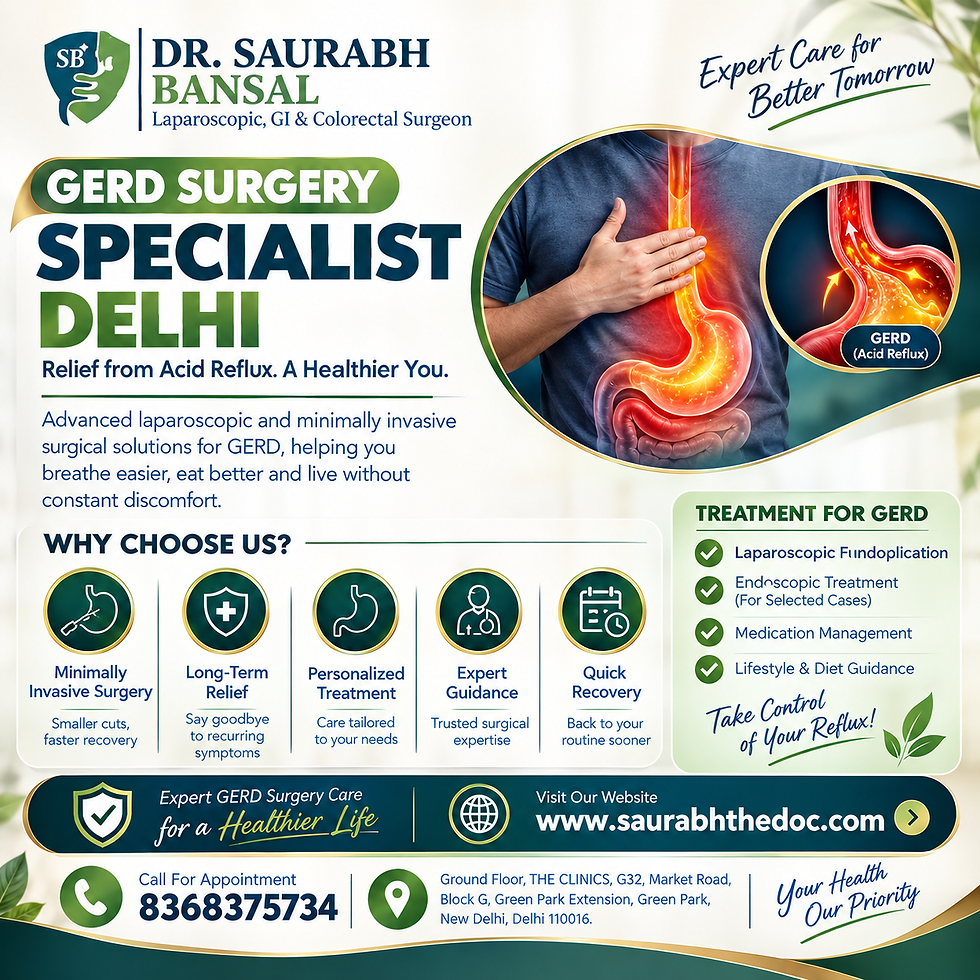
What Is GERD?
GERD develops when the lower oesophageal sphincter does not work effectively. This muscle normally acts as a barrier between the stomach and oesophagus. When it becomes weak or relaxes inappropriately, stomach acid and food can move back into the oesophagus.
A hiatal hernia can also contribute to reflux in some patients. Certain lifestyle factors, excess weight, large meals and specific foods may worsen symptoms.
Because reflux can have different causes, treatment should begin with an accurate evaluation rather than relying only on temporary symptom relief.
Common Symptoms of GERD
GERD symptoms can vary from person to person. Common symptoms include:
Frequent heartburn
Acid or food regurgitation
Sour or bitter taste in the mouth
Burning discomfort in the chest
Difficulty swallowing
Upper abdominal discomfort
Night-time reflux or disturbed sleep
Persistent throat irritation or cough in some patients
Frequent symptoms deserve medical attention, especially when they interfere with normal daily activities.
When Is GERD Surgery Considered?
Medication and lifestyle changes are often used as the initial approach to managing GERD. Many patients can control their symptoms with appropriate medical treatment.
Surgery may be considered for selected patients when symptoms remain troublesome despite appropriate treatment, when there is a significant hiatal hernia or when reflux has resulted in certain complications.
A surgical decision should be based on the patient's symptoms, diagnostic test results, medical history and response to previous treatment.
Role of a GERD Surgery Specialist
A GERD surgery specialist Delhi can assess whether a patient's symptoms are actually caused by reflux and determine whether surgery could provide meaningful benefit.
Before recommending surgery, the specialist may review previous medications and investigations and recommend additional tests when necessary. This helps confirm the diagnosis and identify the most appropriate treatment strategy.
Patients should also be informed about non-surgical alternatives, expected benefits, possible risks and the recovery process.
Tests Before GERD Surgery
A detailed evaluation is an important part of planning reflux surgery. Depending on the patient's symptoms, investigations may include upper gastrointestinal endoscopy, oesophageal pH monitoring, oesophageal manometry and imaging.
Endoscopy can help assess the oesophagus and stomach, while other tests can provide information about acid exposure and oesophageal function.
These investigations help establish whether reflux is responsible for the symptoms and whether a surgical procedure is appropriate.
Laparoscopic GERD Surgery
For suitable patients, anti-reflux surgery can often be performed using a laparoscopic approach. The surgeon makes small incisions and uses a camera and specialised instruments to perform the procedure.
The surgery aims to improve the barrier between the stomach and oesophagus and reduce the backward movement of stomach contents. If a hiatal hernia is present, it may also be repaired during the procedure.
The exact technique depends on the patient's anatomy, diagnosis and individual requirements.
Benefits of Minimally Invasive Surgery
Laparoscopic surgery is minimally invasive and may provide benefits such as smaller incisions, reduced postoperative discomfort and a potentially quicker recovery compared with traditional open surgery.
Some appropriately selected patients may also experience significant improvement in reflux symptoms following surgery.
However, surgery does not provide identical results for every patient. Proper diagnosis and patient selection remain important parts of successful treatment planning.
Lifestyle Measures for Managing GERD
Even when surgery is being considered, lifestyle changes can help reduce reflux symptoms.
Patients may benefit from avoiding very large meals, identifying foods that trigger symptoms, maintaining a healthy weight and avoiding lying down immediately after eating.
Reducing smoking and limiting alcohol may also be advised depending on individual circumstances. A doctor can provide personalised recommendations based on the patient's symptoms and overall health.
Why Surgical Experience Matters
GERD surgery requires careful assessment because not every patient with heartburn needs an operation. An experienced gastrointestinal surgeon can evaluate the underlying problem and determine whether surgery is suitable.
Patients should discuss the expected outcome, potential complications, recovery time and the possibility of continuing medication after surgery.
A personalised treatment plan can help ensure that the chosen approach is appropriate for the patient's specific condition.
Dr Saurabh Bansal for GERD Surgical Care
Dr Saurabh Bansal is an experienced Advanced Laparoscopic, Minimal Access and Gastrointestinal Surgeon in Delhi with more than 18 years of surgical experience and over 11000 successful surgeries.
His areas of expertise include reflux disorders, gastrointestinal surgery, gallbladder disease, hernia, colorectal conditions, gastrointestinal cancers, liver disorders and abdominal wall reconstruction.
As the Founder and Director of The Clinics, Dr Bansal provides comprehensive surgical care at centres in Green Park and Hauz Khas, New Delhi. His approach focuses on accurate diagnosis, personalised treatment planning and minimally invasive surgical techniques when appropriate.
Recovery After GERD Surgery
Recovery varies depending on the surgical procedure, whether a hiatal hernia was repaired and the patient's overall health.
Following surgery, patients may initially be advised to follow a specific diet before gradually returning to their usual eating habits. Physical activity and medication should be resumed according to the surgeon's instructions.
Regular follow-up appointments help monitor recovery and address any concerns during the healing process.
Conclusion
GERD can be more than occasional acidity when symptoms become frequent or persistent. Accurate diagnosis is important for understanding the cause of reflux and selecting an appropriate treatment approach.
For patients who may require surgical treatment, consulting a GERD surgery specialist Delhi can provide a clearer understanding of available options. Laparoscopic anti-reflux surgery may be considered for selected patients after appropriate evaluation.
With detailed diagnosis, personalised treatment planning and experienced surgical care, patients can take informed steps toward managing persistent GERD symptoms and improving their digestive health.


Comments