

What is Gastrointestinal Surgery?
Gastrointestinal surgery refers to procedures performed on the digestive system. This includes the oesophagus, stomach, small intestine, large intestine (colon), rectum, liver, pancreas, and gallbladder. These surgeries are done to treat conditions that cannot be managed with medication alone. Today, most procedures are performed using laparoscopic (minimally invasive) techniques, which involve small incisions and faster healing.
At Dr Saurabh Bansal's clinic, Gastrointestinal Surgery in Delhi is planned using the safest, least invasive method suitable for each patient. Dr Saurabh Bansal (MBBS, DNB Surgery, FNB Minimal Access Surgery) is a GI and laparoscopic surgeon focused on precision and patient-focused care. His approach combines modern technology with compassionate treatment, with the aim of a safe and smooth recovery.
Common Causes & Risk Factors
Chronic Digestive Disorders
Long-standing conditions like acid reflux (GERD), ulcers, or inflammatory bowel disease can damage the digestive tract over time, increasing the need for GI tract surgery Delhi.
Infections & Inflammation
Conditions such as appendicitis, cholecystitis, or intestinal infections can lead to severe inflammation, requiring urgent gastrointestinal surgeon Delhi to prevent complications.
Obstruction in the Digestive Tract
Blockages in the intestines or bile ducts can disrupt normal digestion and cause severe pain, vomiting, and swelling, often making surgery necessary.
Hernias & Structural Weakness
Weakness in the abdominal wall can lead to hernias, in which internal organs push through the muscle layers, requiring surgical repair by a digestive surgery specialist Delhi to avoid serious complications.
Identifying the Symptoms
Difficulty in Digestion
Frequent bloating, indigestion, or discomfort after meals, especially with fatty or heavy foods.
Changes in Bowel Habits
Chronic constipation, diarrhoea, or irregular bowel movements that do not improve with medication.
Unexplained Weight Loss & Fatigue
Sudden weight loss, weakness, or loss of appetite may indicate an underlying condition and hence requires Gastrointestinal Surgery in Delhi.
Nausea & Vomiting
Recurring nausea or vomiting, especially if persistent, can signal digestive tract issues.
Diagnosis Process
Medical History & Physical Exam
The GI surgery doctor Delhi evaluates your symptoms, medical history, and lifestyle factors. A physical examination is performed to check for abdominal pain, swelling, or tenderness.
Imaging Tests (Ultrasound / CT Scan / MRI)
Advanced imaging helps identify issues in the digestive organs, such as inflammation, blockages, tumours, or structural abnormalities, with high accuracy.
Endoscopy & Colonoscopy
These processes of gastrointestinal treatment Delhi use a flexible camera to examine the digestive tract internally, helping detect ulcers, bleeding, polyps, or cancers.
Our Advanced Treatments
Laparoscopic Gastrointestinal Surgery
A minimally invasive approach where a gastrointestinal surgeon Delhi performs complex GI procedures through small incisions using a high-definition laparoscope. This technique ensures less pain, minimal scarring, shorter hospital stays, and faster recovery.
Robotic-Assisted GI Surgery
An advanced surgical method that offers enhanced precision, flexibility, and a 3D magnified view. It is used for selected complex gastrointestinal procedures, including cancer surgeries, and can support quicker healing.

About your surgeon
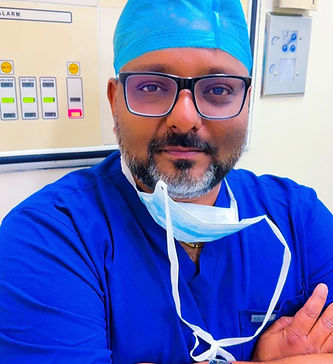
Dr Saurabh Bansal (MBBS, DNB Surgery, FNB Minimal Access Surgery) is a GI and laparoscopic surgeon at THE CLINICS, Hauz Khas, New Delhi. DMC Reg. No. 37887. He performs Gastrointestinal Surgery in Delhi with a focus on minimally invasive techniques and treatment tailored to each patient’s condition, including complex gastrointestinal disorders and GI cancer cases.
Minimally invasive procedures, where suitable, can lead to faster recovery and reduced discomfort. His patient-centric approach, combined with modern surgical technologies, aims for long-term relief and improved quality of life, and he recommends the approach that suits each patient, with compassion and precision.
