
Advanced Hernia Surgery Treatment for Effective and Lasting Relief
A hernia develops when an internal organ or tissue pushes through a weakened area of the surrounding muscle or abdominal wall. It can appear as a visible bulge and may cause pain, heaviness or discomfort, especially while coughing, lifting objects or performing physical activities.
Although some hernias may initially cause mild symptoms, they can become larger or more uncomfortable over time. Timely medical evaluation can help determine the right treatment and prevent potential complications.
Advanced Hernia Surgery Treatment now includes modern minimally invasive techniques that can provide effective repair with smaller incisions and a smoother recovery for suitable patients.
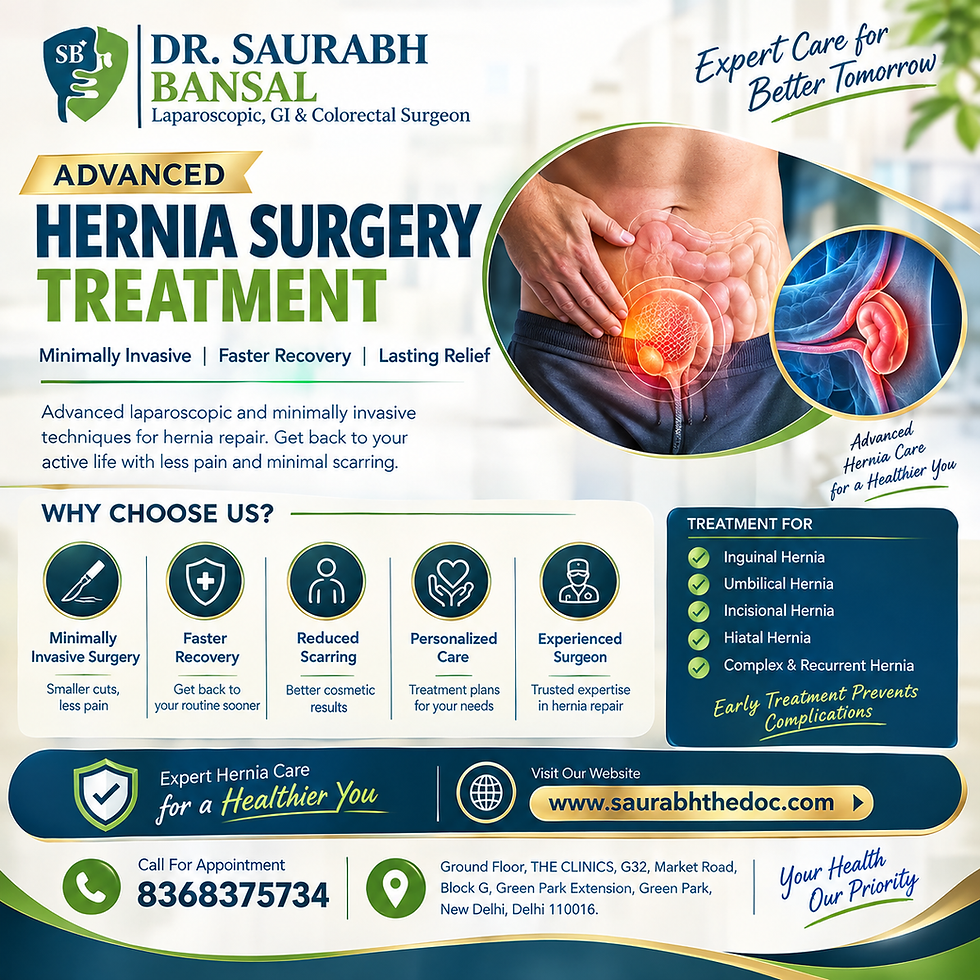
What Is a Hernia?
A hernia commonly occurs when part of the intestine or abdominal tissue pushes through a weak point in the abdominal muscles. Hernias can develop in different areas of the body, with inguinal, umbilical and incisional hernias being among the common types.
Some people may notice a soft bulge that becomes more prominent when standing, coughing or straining. Others may experience pain, pressure or a dragging sensation in the affected area.
A hernia generally does not disappear permanently on its own. Therefore, persistent symptoms should be assessed by an experienced surgeon.
Common Symptoms of Hernia
The symptoms of a hernia can vary depending on its location and size. Common signs may include:
A visible or noticeable bulge
Pain or discomfort around the affected area
A feeling of heaviness or pressure
Discomfort while coughing or lifting
Pain during physical activity
Increasing size of the bulge over time
Sudden severe pain, vomiting or a hernia that becomes firm and cannot be pushed back should be treated as an emergency and requires immediate medical attention.
When Is Hernia Surgery Required?
Not every hernia requires immediate surgery. In some cases, a surgeon may recommend monitoring the condition, particularly when symptoms are minimal.
However, surgery is often recommended when a hernia causes persistent pain, increases in size, interferes with daily activities or presents a risk of complications.
The appropriate treatment depends on the type and size of the hernia, previous surgeries, overall health and other individual factors.
Advanced Hernia Surgery Treatment
Modern hernia surgery has moved beyond traditional large-incision procedures. For suitable patients, minimally invasive techniques such as laparoscopic hernia repair can be used to strengthen the weakened abdominal wall.
During laparoscopic surgery, the surgeon makes small incisions and uses specialised instruments and a camera to access the affected area. A surgical mesh may be placed to reinforce the weakened tissue and reduce the risk of recurrence.
The exact technique depends on the patient's condition and should be decided after a detailed surgical evaluation.
Benefits of Minimally Invasive Hernia Surgery
For appropriate patients, minimally invasive hernia repair can offer several advantages compared with traditional open surgery. These may include smaller incisions, reduced postoperative discomfort, less visible scarring and a potentially faster return to normal activities.
However, minimally invasive surgery is not suitable for every patient. The safest surgical approach depends on the type of hernia, previous abdominal procedures and the patient's overall health.
Why Early Hernia Treatment Matters
Ignoring a hernia can allow it to gradually become larger and more symptomatic. In some cases, complications can occur when the tissue trapped inside the hernia loses its blood supply.
Early consultation allows a surgeon to assess the hernia before it becomes more complicated. It also gives patients an opportunity to understand their treatment options and make an informed decision.
Choosing an Experienced Hernia Surgeon
Experience is an important consideration when selecting a surgeon for hernia treatment. A qualified surgeon can evaluate the hernia carefully and recommend an appropriate surgical technique based on the individual patient's condition.
Good treatment is not simply about repairing the visible bulge. The underlying weakness in the abdominal wall also needs to be addressed to achieve a durable repair and reduce the possibility of recurrence.
Dr Saurabh Bansal for Advanced Hernia Surgery
Dr Saurabh Bansal is an experienced Advanced Laparoscopic, Minimal Access and Gastrointestinal Surgeon in Delhi with more than 18 years of surgical experience and over 11000 successful surgeries.
His areas of expertise include hernia surgery, gallbladder disease, gastrointestinal conditions, colorectal surgery, reflux disorders, gastrointestinal cancers, liver disorders and abdominal wall reconstruction.
As the Founder and Director of The Clinics, Dr Bansal provides comprehensive surgical care at centres in Green Park and Hauz Khas, New Delhi. His approach focuses on accurate diagnosis, personalised treatment planning and minimally invasive techniques when appropriate.
Recovery After Hernia Surgery
Recovery varies depending on the type of hernia, surgical technique and the patient's general health. Patients are generally advised to follow their surgeon's instructions regarding wound care, medication, physical activity and lifting restrictions.
Gradual movement is often encouraged after surgery, while strenuous activities should be resumed only according to medical advice.
Regular follow-up can help monitor healing and ensure that the repair is progressing properly.
Conclusion
A hernia may begin as a small and relatively painless bulge, but it can become increasingly uncomfortable or lead to complications if left untreated. Modern Advanced Hernia Surgery Treatment provides effective surgical options, including minimally invasive techniques for suitable patients.
A detailed evaluation by an experienced surgeon can help identify the type of hernia and determine the most appropriate treatment. With proper diagnosis, personalised surgical planning and appropriate postoperative care, patients can work toward a stronger abdominal wall and a more comfortable return to everyday activities.


Comments